The GDPR Definition and Its Implications
Article 4(5) of the General Data Protection Regulation defines pseudonymisation as "the processing of personal data in such a manner that the personal data can no longer be attributed to a specific data subject without the use of additional information, provided that such additional information is kept separately and is subject to technical and organisational measures to ensure that the personal data are not attributed to an identified or identifiable natural person."
"Pseudonymisation of personal data can reduce the risks to the data subjects concerned and help controllers and processors to meet their data-protection obligations."
GDPR Recital 28
Two phrases in that definition carry most of the operational weight. The first is "kept separately," which establishes a physical or logical separation requirement between the pseudonymised data and the information needed to re-link it to an individual. The second is "technical and organisational measures," which signals that pseudonymisation is not a single technical operation but a system of controls spanning both technology and process.
The definition also makes clear, through Recital 26, that pseudonymised data remains personal data. This is the most commonly misunderstood aspect of pseudonymisation under GDPR. Organisations that treat pseudonymised datasets as falling outside the regulation's scope are making a legal error that can result in non-compliance findings during supervisory authority audits.
Organisational Controls: Who Can Re-Link, and Under What Process
The organisational dimension of pseudonymisation concerns the human processes and governance structures that determine when and how re-identification can occur. These controls are at least as important as the technical mechanisms, because a technically sound pseudonymisation scheme can be rendered meaningless by poor organisational practices.
Role Separation
The principle of role separation requires that the individuals or teams who work with pseudonymised research data are different from those who have access to the re-linkage keys. In a life-science R&D context, this typically means that research scientists work exclusively with pseudonymised identifiers, while a separate data-management or data-protection function holds the mapping between pseudonyms and real identities.
Role separation must be enforced structurally, not merely through policy documents. The research environment should have no technical path to the key-management system. The key-management system should have no interface that allows bulk export of mappings. These boundaries must be verified periodically through access reviews and penetration testing.
Re-Linkage Approval Gates
Re-linkage, the process of connecting a pseudonymised record back to an identified individual, should never be a routine operation. It should require a formal request that specifies the justification, the minimum set of records to be re-linked, and the intended use of the re-linked data. The request must be reviewed and approved by a designated authority, typically the data-protection officer or a re-linkage committee, before execution.
The approval process must generate a durable record: who requested re-linkage, who approved it, what records were re-linked, when, and for what purpose. This record becomes part of the audit trail that demonstrates compliance during regulatory inspections.
Time-Limited Access
When re-linkage is approved, the access should be time-bounded. The requesting party receives access to the re-linked data for a defined period, after which access is automatically revoked. This prevents the gradual accumulation of identified data in environments that are designed to hold only pseudonymised records.
Technical Controls: Encryption, Boundaries, and Logging
The technical dimension of pseudonymisation covers the cryptographic, infrastructure, and monitoring mechanisms that enforce the separation between pseudonymised data and re-linkage information.
Key Management
The pseudonymisation key, whether it is a symmetric encryption key, an HMAC secret, or the seed for a tokenisation algorithm, is the single most critical asset in the pseudonymisation system. If the key is compromised, every pseudonymised record it protects becomes linkable to a real identity.
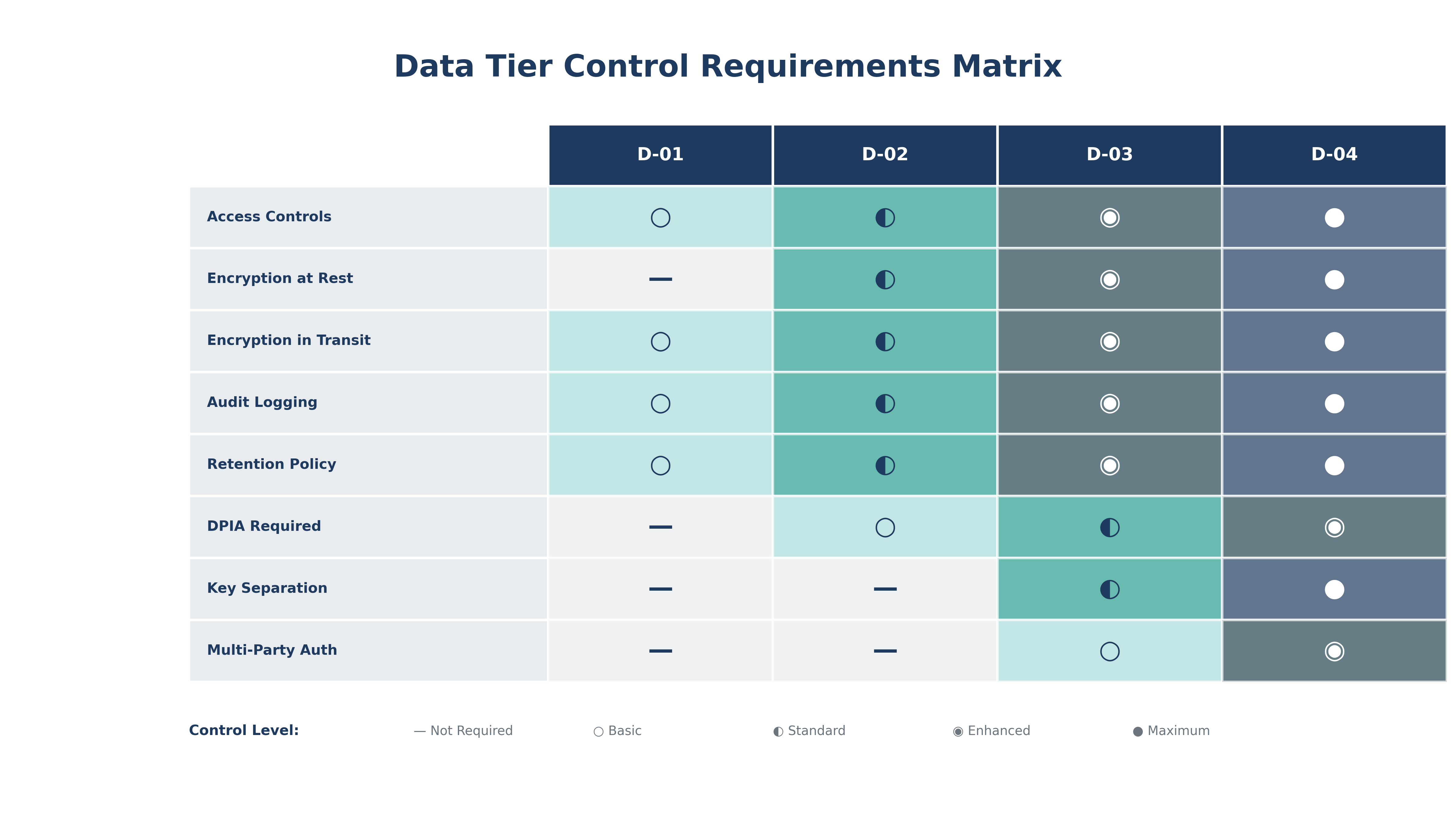
Key management for pseudonymisation must address several requirements. The key must be stored in a hardware security module or equivalent tamper-resistant system, separate from the infrastructure that hosts the pseudonymised data. Key access must be restricted to the re-linkage function and must require multi-party authentication. Key rotation must be performed on a defined schedule, with re-pseudonymisation of affected records using the new key. Key destruction must be verifiable when the legal basis for processing expires.
Access Boundaries
The pseudonymised dataset and the re-linkage key must reside in different security domains. In a Kubernetes-based platform, this means different namespaces with network policies that prevent direct communication. In a cloud environment, it means different accounts or subscriptions with no cross-account access paths. The boundary must be enforced at the infrastructure level, not merely at the application level, because application-level controls can be circumvented by anyone with infrastructure access.
Comprehensive Logging
Every operation that touches either the pseudonymised data or the re-linkage system must be logged. The logging must capture the identity of the actor, the operation performed, the timestamp, and the data objects affected. Logs must be written to an immutable store that is not accessible to the actors being logged. This prevents both accidental deletion and deliberate tampering.
Log analysis should include automated detection of anomalous patterns: bulk access to pseudonymised records, repeated queries against the re-linkage system, or access from unexpected network locations. These patterns may indicate a breach attempt or an unauthorised re-linkage effort.
Common Mistakes
Treating Pseudonymised Data as "Safe by Default"
The most prevalent mistake is the assumption that once data has been pseudonymised, it can be handled with relaxed controls. This assumption contradicts the GDPR's explicit classification of pseudonymised data as personal data. Organisations that store pseudonymised datasets on shared research drives, grant broad access without role-based restrictions, or skip data-protection impact assessments because "the data is pseudonymised" are operating outside the regulation's requirements.
Pseudonymisation is a risk-reduction measure, not a risk-elimination measure. It reduces the probability that a data breach will result in the identification of data subjects, and GDPR recognises this by treating pseudonymisation as a mitigating factor in breach-notification assessments. But it does not remove the data from GDPR scope, and it does not excuse the controller from implementing the full range of appropriate technical and organisational measures.
Weak Key Separation
A second common mistake is implementing pseudonymisation with the re-linkage key stored in the same environment as the pseudonymised data. This occurs when organisations use a database column to store the mapping between real identifiers and pseudonyms, with both the mapping table and the research data accessible through the same database credentials. It also occurs when the pseudonymisation key is stored as an environment variable on the same server that hosts the pseudonymised dataset.
In both cases, a single compromised credential exposes both the pseudonymised data and the means to reverse the pseudonymisation. The "kept separately" requirement in Article 4(5) is not satisfied. A regulator evaluating this configuration would likely conclude that the data has not been pseudonymised within the meaning of the regulation.
No Re-Linkage Process
Some organisations implement the technical side of pseudonymisation but neglect to define a formal re-linkage process. The mapping exists, the key is stored somewhere, but there is no documented procedure for when re-linkage is permitted, who can authorise it, or how re-linkage events are recorded. This creates a governance vacuum: anyone who discovers the key location can perform re-linkage without accountability.
Static Pseudonymisation Without Review
Pseudonymisation schemes that are implemented once and never reviewed are vulnerable to advances in re-identification techniques. A hashing scheme that was considered adequate five years ago may be reversible today through lookup-table attacks or inference from auxiliary data. Organisations must periodically assess whether their pseudonymisation method remains effective against current re-identification capabilities and update it when it does not.
Effective pseudonymisation requires coordinated technical and organisational controls. Technical measures, including key separation, access boundaries, encryption, and comprehensive logging, must work in concert with organisational measures such as role separation, re-linkage approval gates, and periodic review. Neither dimension is sufficient on its own. A technically robust pseudonymisation scheme without organisational controls is vulnerable to insider misuse. An organisationally sound process without technical enforcement is vulnerable to technical circumvention.
Building a Defensible Pseudonymisation Posture
A defensible pseudonymisation posture, one that will withstand regulatory scrutiny, requires documentation that connects every control to the requirements of Article 4(5). The documentation should describe the pseudonymisation method, justify its selection, identify where the re-linkage information is stored, enumerate the technical measures protecting it, specify the organisational process for re-linkage, and reference the logging and monitoring mechanisms that provide auditability.
This documentation should not be a static policy document. It should be a living artefact that is updated whenever the pseudonymisation method changes, whenever the key-management infrastructure is modified, or whenever the re-linkage process is invoked. Each update should be version-controlled and linked to the change that triggered it.
Periodic audits of the pseudonymisation controls should verify that the documented controls match the implemented controls. A common finding in regulatory audits is that the documentation describes an ideal state while the implementation has drifted. Automated compliance checks, such as verifying that the network policy between the data namespace and the key-management namespace is still in place, reduce the risk of this drift going undetected.
Finally, organisations should treat pseudonymisation as a design constraint rather than an afterthought. When a new research project is initiated, the pseudonymisation requirements should be defined during the data-architecture phase, not retrofitted after the data has been collected and stored in an uncontrolled format. Retrofitting pseudonymisation is more expensive, more error-prone, and more likely to produce a configuration that does not satisfy the "kept separately" requirement.
References & Further Reading
- GDPR Full Text (WIPO Lex) Complete GDPR legal text — pseudonymisation definition (Article 4(5)), genetic data classification, and special-category data protections (Article 9).
- GA4GH Data Repository Service (DRS) Standard interface for dataset retrieval independent of repository architecture — a building block for federated genomic access.
- GA4GH Passports and AAI Permission encoding and identity/authorisation scheme for controlled access to sensitive genomic data across institutions.
- GA4GH Overview: Responsible Sharing of Genomic Data (PMC) Explains the rationale for aggregated vs federated approaches to responsible data sharing in genomics research.
- Datasheets for Datasets Structured documentation approach for datasets — useful as lightweight governance artefacts for internal compliance.